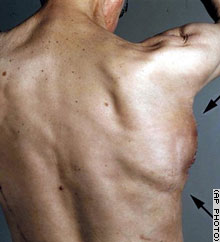
Giving love to scrubs

On of the nice quirks of medlogs.com is when it hiccups up some old posts you've overlooked. [Is it a bug or a feature? -- ed.] Consider this gem from Vertical Mattress, on wearing scrubs:

They're fashion classics, always appropriate, always stylish, accomodating all body types, ubiquitous but individual. In the hospital, washed-out blue is the new black. You can layer them over a t-shirt or wife-beater, under a white coat, and you can wear them home if you're feeling tired enough that you're willing to ignore how tacky it is to wear scrubs outside the hospital (so gauche).

So true! (but a spirited rebuttal from Noah's "busty" sister appears here).

Last month, I worked in many emergency department attendings requested shirt & tie for the men, citing studies that patient compliance, and physician authority, is enhanced with formal attire (this study is the closest proof I could find).

This month, it's scrub city, baby! And damned if everyone doesn't look fabulous. Best variations: for men, light blue scrub top with khaki cargo pants. For women, blue scrub pants with tight black cotton top. Works great with or without white coat. Attendings whose scrubs reveal tattoos get bonus points.

By the way, evidence is really lacking in the attire / respect / compliance debate. Consider this:

Nearly 30% of patients incorrectly identified their doctor as wearing a necktie when no necktie was worn, and the perception of tie wearing was correlated with a positive impression of physician appearance. Wearing or not wearing a necktie did not significantly affect patients' impression of their physician or the care they received. However, patients seemingly preferred the appearance of physicians who were perceived to wear neckties.

This suggests the old maxim, "the suit makes the man" isn't true! Instead, good male doctors can make patients percieve that they're wearing a tie, even when they're not. How's that for projecting authority?

Meet the press

Kevin's getting some attention lately, from old and new media alike. It's well-deserved, as his blog is an excellent distillation of relevant medical news. One media blogger remarks:

The information the docs were offering was complex and many times serious. Trivializing it could have profound implications. It needed more time to be explained and understood than the 60 second special report on the news with dramatic music and MTV-like camera editing. And the 250 word story in the paper where your part got maybe 20 words didn't cut it, either. This is a very different community with a distinct culture that doesn't translate well in the media. I'm looking forward to reading their stuff. Unfiltered.

I've expressed my frustration with big-media health reporting in the past. And I'm consistently impressed with the scholarship and analysis by many of the medical bloggers. Not to mention some of the illustrative cases and heart-rending stories.

But how much of our writing is really reaching patients? It seems that for every comment or email from the 'lay audience,' I get three or four comments from colleagues in health care. Maybe it's because I'm still a student, or because I don't write as much about heart disease and diabetes. But I'd be curious to hear about the demographics of some of the physician bloggers.

Grand Rounds on 9/28

If you're a medical blogger (which so many of you are), and if you're interested in reaching more nonmedical readers, listen to this: I've received a lot of positive feedback about the idea for "Grand Rounds" (Carnival of the Caregivers) -- a series of "best-of-the-week" posts from around the medical blogosphere, with rotating hosts. I can vouch for the boost in traffic when these weekly linkfests are properly executed (thanks, Pete).

I'd like to host the first Grand Rounds on Tuesday, September 28th. I'll be soliciting posts the week before that -- so get some good stuff ready. And if you have the ear of some of the blogging elite, let 'em know. Hopefully we'll be bringing a lot of new readers in to see our best posts on health care developments, new medical reports, drug companies, interesting cases and anecdotes, etc.

After my week, hosting will rotate to another medical blogger, and we'll do it all over again. Stay tuned!

Something old, something new

I spoke recently with a bride about her wedding day -- today, September 11. She said picking that date wasn't an easy decision but, practicality aside, it was time to make positive associations with 9/11.

Yes. We can continue to remember that awful day, while layering new memories. It's as inevitable as the growth of the babies born on 9/11/01 and subsequent anniversaries.

I helped deliver one such baby last year. Time marches on. These kids will first associate that day with cake and presents and warmth, and only later realize their birthday signifies horrible events for countless others.

You know what? They'll reconcile the two interpretations. Fitzgerald remarked that holding more than one perspective in one's mind was the mark of a first-rate intelligence. It also sounds like a good defense against the fundamentalist mindset.

And it's not just our concept of 9/11 that can change. Maybe this sick child will give us the world a new association for Abu Ghraib. She was brought to the infamous prison by her Iraqi parents, who had exhausted treatment options in their country, and turned to the US for help.

That they would do this is already a small wonder. But her health isn't secure yet. She's was born with cavernous hemangiomas, which usually enlarge before harmlessly involuting. But hers are already big enough to threaten her airway, and in she could die soon if she's not treated.

As a result of Chief Wiggles' blogging on this situation, Dr. Marcelo Hochman has come forward to help. But more needs to be done to get this girl her surgery. Operation Give is on the case, soliciting donations via paypal. Readers can help.

Something new can come from Abu Ghraib. Good things can be celebrated on 9/11. We can remember the horrors while taking postive steps forward. It's one of the best things about us.

Thanks to Chai Tea Latte and ME and Ophelia for their writing on this matter. Cross-posted to the Lingual Nerve

All docs are grunt docs

I've heard military types sometimes compare the speed at which they can dismantle and reassemble their weapons.

Maybe there's an equivalent for health care personnel.

Today I reassembled my white coat after a vigorous washing (don't ask why). The pins, pens, pads, PDA, nametags, pen light, trauma scissors, spare gloves, gauze, tape, bactrim, lube, Maxwell's, Sanford's, quick-reference charts, eye chart, reflex hammer, pocket pharmacopia, and "pocket Tintinalli's" (which is large enough to use as a doorstop) all went in.

38 seconds. Six pounds.

I'm ready for battle.

Future Stalk

Last year, when blogborygmi was mostly just notes to myself, I filled a lot of posts with news on GPS miniturization and cell phone incorporation. Some of that research went into my last op-ed.

So, I think it's safe to say people saw this coming:


GLENDALE, Calif. (AP) - A 32-year-old man has been charged with stalking for allegedly attaching a cell phone and global positioning system to his ex-girlfriend's car to track her whereabouts, authorities said...

...Police said Gabrielyan, who ran a music and video shop, used the satellite tracking system to follow the unidentified 35-year-old woman and meet her unexpectedly at a book store, an airport, a cemetery and dozens of other places after she ended their relationship.

"This is what I would consider stalking of the 21st century," said Lt. Jon Perkins of the Glendale Police Department.

At least it's some comfort that this 21st-century technology dilemma was undone by a common 20th century one: the woman discovered how Gabrielyan was tracking her when she found him crawling under her car, trying to replace the cell phone's battery.

Homeland scrutiny

UMass Worcester grad student R---- is missing. He was last heard from this weekend, on the way to his uncle's home in Pennsylvania. Some faculty at the school are raising the possibility that foul play was invovled, because R---- works in an Infectious Disease lab affiliated with biodefense efforts.

This is front-page, over-the-fold news in Worcester (subscription required). It seems to me, though, that Telegram & Gazette reporter Martin Lutrell has trumped up what's most likely a sad, sad car accident. The idea of terrorists ambushing or chasing this grad student hundreds of miles from home, to steal his ID and gain access to a Level 2 lab... it strains credulity.

One of R----'s mentors, Dr. I----, was the one who raised specific concerns about his access to the lab, and the lack of an apparent vigorous search:

"This could be a serious homeland security case. This isn't a joke," she added.

Worcester police confirmed that a missing person report was filed over the weekend, and the detective bureau is handling it.

But Ms. I----, a Ph.D. in her field, said police are not actively looking for Mr. R----.

I wouldn't call myself an expert on these matters, but I do think the Ph.D. entitles her, literally, to be called "Doctor." I'm curious, though, why Dr. I----'s background and status give her any special insight into police operations (it's like saying I have insight into journalism, but I digress...) If this reporter was comfortable using her as a source on search procedures, he should press on, and explain how the Worcester Police Department might look for a missing adult lost somewhere between Connecticut and Pennsylvania.

Buried in the middle of the story are the calming voices of reason:

UMass Memorial Medical Center spokesman Michael Cohen said the FBI got a copy of the missing person report before it was understood that Mr. R---- lacked access to the Level 3 labs, which contain dangerous biological agents.

"These are colleagues who are concerned about another colleague," Dr. A---- said. "I think they're worried and that they created some angles to help get things done. There would be no reason for anyone to target him."

Dr. I---- is doing what she can to help find her student. I don't think what she did was appropriate, though I can certainly understand her motivation. I further doubt that raising these concerns about SARS, kidnapping, and homeland security to the press will help the effort to find R----. But she spoke to an experienced journalist who gathered dissenting opinions from other faculty. That reporter should've caught on to her attempt at manipulation, and responded by downplaying her unwarranted fears. Instead, he passed them along to the general public.

This is not responsible behavior from the media, or from infectious disease researchers involved in biodefense. My thoughts today are where they should be: with the family, and classmates and colleagues close to R----.

UPDATE: Just after posting this, it was publicized that R---- has been located, alive and recovering from an auto accident in a New Jersey hospital. He is well and expected to be discharged today.

DIY Surgery

You remember that hiker whose hand got caught under a massive boulder? His book is coming out this month. Outside magazine has an excerpt of Aron Ralston's Between a Rock and a Hard Place:

Out of curiosity, I poke my thumb with my knife blade twice. On the second prodding, the blade punctures the epidermis, like it is dipping into a stick of room-temperature butter, and releases a telltale hissing. Escaping decomposition gases are not good; the rot has advanced more quickly than I guessed. Though the smell is faint to my desensitized nose, it is abjectly unpleasant, the stench of a far-off carcass.

Hat tip: MeFi. Raltson's been making the rounds at Wilderness Medicine conferences. He seems like a good writer, and has a story with lessons for surgery, physiology, infectious disease, and appropriate outdoor preparedness.

There is such a thing as overinterpretation, however. A little searching around on Ralston a led to this article, where an expert in Body Integrity Identity Disorder diagnoses Ralston as an apotemnophilic -- someone driven to amputation in order "feel themselves" again.

Sheesh. Can't wait for the google searches on that term.

Sans the S

I don't want to make light of the disaster unfolding a thousand miles south. But I was surprisingly amused when I misread a headline on Hurricane Frances in today's paper:

"France Slowly Creeps up on Florida"
For a second I thought it was a story about plate tectonics (I hadn't had my coffee, ok?) But the fun didn't stop there:

"Millions told to flee France"
That's odd - I hear it's nice this time of year.

"France cuts power to 2 million people in Florida"
Their anti-Americanism has gone too far.

France Slow, Fierce
I thought that's how they described us.

And finally: "Storm Carries Undercurrent of Angst"
Mais bien sur! This is truly a storm the French existentialists would've found familiar.

Building blocks

I remember an education major telling me, ten or so years ago, about some findings on student learning. If I recall (and probably grossly oversimplify): people learn a subject best when taught exclusively for a shorter duration, rather than drawn out and interspersed with other material.

In other words, the traditional college semester is less effective than, say, the approach employed by residents and clinical med students. Four or five classes spanning months is less effective than sequential one-month blocks of material.

That seems right to me. I don't think I'd ever get comfortable prescribing seizure meds, for instance, if my neuro block was also spent covering colon cancer and pregnancy.

Granted, this is all for the convenience of the teachers -- college professors couldn't sustain their careers (or their minds) teaching the same material every month, full-time. And hospitals couldn't staff the floors without a new supply of full-time students and residents.

Whatever the source of the arrangement, I'm mostly glad for it. The constant variety is nice, and the prospect of "revisiting" each specialty down the road, and brushing up on those skills, is comforting.

Right now, however, I'm glad to be starting my second consecutive month of Emergency Medicine. It's a different hospital -- a different state -- but the first time in a while that I haven't felt like a fish out of water. After spending the beginning of each rotation frantically trying to figure out how to function, I've been hitting my stride in the past few weeks. I want to continue operating at a level a little bit higher than 'newbie' -- for just a while longer.

hypertext languages

Helix and Lileks continue to inspire. Helix, because he's taken it upon himself to doggedly unearth new med student blogs like this one. It's that guy from Matchbox 20; I think he's becoming a doctor. I'll believe anything, now that Paul from the Wonder Years is a corporate lawyer.

Lileks continues to express things that I really ought to be able to, and with breezy nonchalance, at that. For instance: I didn't mention it when the "Next Blog" button took me to this med student's site because 1) it wasn't particularly medical and 2) it wasn't particularly Enlgish.

But when the great Lileks came across this strangely similar site, he met the challenge and aptly described it:

[the site] makes me feel as though I am just having a shower of mini-strokes, because it makes sense and then it doesn’t, and then it does.

I'm not even sure if it's the same language, or if Malaysians move in and out of written English as easily as my parents do for spoken English. It's just compelling to read, like a half-finished cryptoquote. And yes, for a moment it might feel like a TIA, or that Twilight Zone where the world's vocabulary shifts ... except for one poor guy who has to learn the new English the hard way.

Enough. Lileks also points out this blogspot treasure, which is the first blog I've seen with automatic postings. I think it's designed to steer surfers-of-recently-updated-sites to a get rich quick scheme. In other words, blogspam is here. One expects it might get more sophisticated with time.

Authentic

Everyone knows when an email is spam, but no one wants to sift through the stuff manually (or trust crude Bayesian algorithms which tend to miss the real messages). On the other hand, it can be hard to pick out a digital photo that's been skillfully doctored.

Two new reports suggest strategies, using complex pattern recognition, can spot the authentic stuff for us.

Alert reader Ingrid Jones pointed me to this story on spam and DNA. Researchers have taken software for looking at conserved DNA sequences across species, and adapted it for sifting through spam. Interesting stuff, and more details can be found in the original piece in New Scientist:

Instead of chains of characters representing DNA sequences, the research group fed the algorithm 65,000 examples of known spam. Each email was treated as a long, DNA-like chain of characters. Teiresias identified six million recurring patterns in this collection, such as "Viagra".

Each pattern represented a common sequence of letters and numbers that had appeared in more than one unsolicited message. The researchers then ran a collection of known non-spam (dubbed "ham") through the same process, and removed the patterns that occurred in both groups...

...its rate of misidentifying genuine email as spam was just 1 in 6000 messages. Losing a single email in a torrent of spam is a greater failing in a filter than letting the occasional spam email through...

...Just as in genetic analysis, Teiresias could be taught that CCC and CCU codons both produce the same amino acid, proline, the anti-spam system can be trained to accept $ and s as identical.

I remember when I spent time on GenBank, searching for human alpha-4 integrin splice variants, building "consensus sequences" and designing probes. Good times.

The story reminded me of a finding this spring on the authenticity of digital images:

Hany Farid, a professor of computer science at Dartmouth's Institute for Security Technology Studies, has developed a method to analyze the mathematical data behind digital images. Each pixel has corresponding code which instructs the software to display colors. Farid's research found that unaltered images have naturally-occurring patterns. Altered portions of images, on the other hand, ''make new statistics in the image, which can be detected,'' Farid said.

Isn't it comforting to know there's an underlying pattern to real things? And with a little effort, we can uncover it?

Medical aside: Authentic comes from the Greek (surprise) word for author, meaning unadulterated from the original, or undoctored. It makes you think, though, why "doctor" has such negative connotations as a verb. If I may say so, I did a pretty good job "doctoring" a long thigh laceration yesterday.

Don't hate the payer

Graham Walker's been working hard on a flash animation promoting single-payer health insurance.

The animation is skillfully executed. With facts and examples geared toward the lay reader, Graham makes both reasonable and emotional appeals for the system. Funny ones, too. Plus, it's neat to hear another blogger's voice (I assume it's Graham).

I don't want to give too much away, because it's best to let these multimedia extravaganzas wash over you. All I'm going to say is: as a former DJ, I do not believe Prom Committees are benevolent entities. I mention this because feelings about Prom Committees may now dictate how the American health care debate unfolds. I would be reluctant, as a patient or doctor, to put my faith in equitable disbursements from the Prom Committee. They've been kind of petty and unreliable, in my experience.

But not all proms are the same.

Bruit humor

Knowing that Kevin, M.D. is not one to endorse just any website, I took his recommendation and visited carotids.com.

Carotids' layout and variety of posts make it a little hard to know what to expect behind each link, but the author usually choses stories and sites that are worth a look. I was entertained. And informed! Now I can say I've seen what a mad cow looks like (note: the cow is actually suffering from foot-and-mouth disease). And the author linked to this fascinating thread on pulseless hearts, which our neighborhood of the blogosphere completely missed.

Running Commentary

I was talking to my hot-shot high-powered Manhattan editor friend a few weeks back, when I remarked that I couldn't predict which of my posts would garner comments. She interpreted this to mean I should stick to writing, and leave the editorial decisions to people like her.

Well, I don't think even she could've predicted this. Mostly because she edits children's books, but still.

That thread has it all -- passionate positions, good arguments, hidden identities, and blockbuster revelations. Mix in some classic citations from the literature, and you've got a thread that will not be topped, unless my attending jumps into the fray. Or the ankle patient.

I don't think there's much more that needs to be remarked on, since Rose and Anonymous have explained their perspectives well, and came to some understanding. Input from Doc Shazam, Doc Lassiter, and JB was welcome as well.

If you're interested in the finer distinctions of evidence-based medicine, check out these posts from the early days of blogborygmi: Evidence for EBM, Circumstantial Evidence, and Handling the Truth. Kevin, M.D. has also posted on this subject, and wrote originally about the patient who demanded ovarian cancer testing.

Maybe EBM evokes such responses because it pits physicians' best ideals (trust, research to help patients) with their worst frustrations (costs, fears of reprisal). And this duel plays out every day, behind every patient encounter.

Chew on this

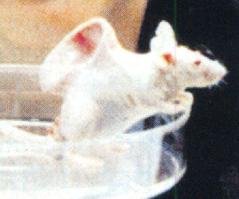
So it took eight years to go from point A to point B:


Worcester, 1996Kiel, 2004


But is this really progress? CNN is reporting today:

According to this week's issue of The Lancet medical journal, the German doctors used a mesh cage, a growth chemical and the patient's own bone marrow, containing stem cells, to create a new jaw bone that fit exactly into the gap left by the cancer surgery.

Tests have not been done yet to verify whether the bone was created by the blank-slate stem cells and it is too early to tell whether the jaw will function normally in the long term.

But the operation is the first published report of a whole bone being engineered and incubated inside a patient's body and transplanted.

I've made some small contributions to the study of cell attachment and mechanotransduction, with an eye toward enhancing applications like this. But having looked at Warnke's Lancet paper (subscription required), I'm a little disturbed. This research doesn't seem based on any hypothesis, practicality, or need.

As far as I can tell, the surgeons could've designed and built a well-fitting, complete titanium jaw and secured it with established, titanium osteosynthesis screws. This could've been done in one operation, with familiar and established risks.

Instead, here's what they did: they designed and built a titanium mesh, filled it with carrier bone mineral blocks, coated with a recombinant human bone growth factor embedded in cow collagen, squirted in some of the patient's bone marrow to theoretically supply stem cells for future bone growth, implanted it in his lat, waited 7 weeks, confirmed some bony synthesis with a radioactive scan, took it out, and put it in his face. They chose a course of at least three operations, involving cow parts, high doses of expensive growth factors, radiation, and unknown tissue products, with a plan to remove the original titanium scaffold in a year, and see if what's left can support force. The authors cite "ethical concerns" for not histologically sampling the tissue to see what, exactly, they're putting in the guy's mouth after weeks of incubation on his back. Is it bone? Is it mostly scar tissue? Is it osteosarcoma? Is the cow tissue causing inflammation? None of these questions were examined.

(There's some handwaving in the piece about how the patient could not have accepted an autologous graft, because his coumadin predisposes bleeding from potential donor sites. There's additional reports that the patient was miserable with his old, subtotal titantium implant, and CNN adds that total artificial implants risk infection. I don't see how the alternative -- titanium mesh, bovine collagen, and three or four times as many operations -- is any less risky.)

The commentary on the piece, by Stan Grothos, notes some of this:

The neccessity for large quantities of bone morphogenetic protein-7 (BMP-7) requires more critical assessment, especially in relation to the impurity of the cellular component used...

Warnke and colleagues’ procedure needs greater numbers of patients and a more rigorous scientific assessment of the nature of the implants over a longer time to improve efficacy. In particular, the analysis of the bony tissue in the implants provides no direct evidence that a normal mandibular structure had been formed or whether there has been successful long-term integration into the surrounding tissue. However, Warnke's primary goal was to produce an implant that approximated the dimensions of a normal mandible, to provide successful functional and aesthetic outcomes for their patient. Although an anatomically correct mandible might not be produced by the present method, a structure resembling a normal mandible needs further testing of the functional loading capacity of the bony substitute.

This is a roundabout way of saying that nothing has been accomplished, other than proof-of-concept. And, like the UMass mouse photo above shows, the concept was proven pretty well eight years ago. Actually, the original Vacanti paper is more innovative than this new work -- at least their initial scaffold was flimsy and biodegradable, and the subsequent engineered tissue was found to be histologically similar to elastic cartilage.

So, despite advances in stem cell differentiation and cell attachment research, tissue engineering continues to be a shotgun-driven field. But hey, whatever works -- the man is chewing his food again. One colleague remarked, "I'm not sure what's more disturbing -- the fact that they grew a jaw in his back, or the fact that his first choice for a meal was a bratwurst sandwich."

I'm willing to venture: the most disturbing thing about this is that it's wasteful, dangerous, doesn't tell us anything new, and probably wouldn't haven been approved in this country.

Worth pondering

I saw a patient today with a sore ankle, who'd been limping four four days since an inversion. I evaluated him, applied the trusty Ottawa Ankle Rules, and decided he didn't need an X-ray. Since his joint was stable, chances were very good all he needed was rest, ice, compression, and elevation.

When I told my attending, he smiled and reminded me that the Ottawa rules were about cost-containment in Canada -- "and in our country, I can't afford not to get an X-ray."

I thought about that exchange when I read Cut-to-Cure tonight:

An older physician brought this up the other day during a discussion about liability premiums and declining reimbursement. It is a good, simple expression about the frustration many physicians feel:

"Why am I worth so little when I do my job right, and worth so much when I make a mistake?"

Damn. Something tells me I'm going to miss these care-free, evidence-based med student days. Especially if I'm ever an attending who's worth a lot.

Bard-Parker, by the way, has listed Lingual Nerve under "Group Therapy" on his blogroll. It really works, on several levels.